Artificial Personhood & Test Case
Algorithm Test Case, where it stands now
Picture the disclaimer first:
Paid for by Artificial LLC. Generated in whole or part by artificial intelligence. Not authorized by any candidate or candidate's committee.
The law demands that a speaker name itself, but here the speaker amounts to a headless legal fiction, animated by a network of computers and some code.
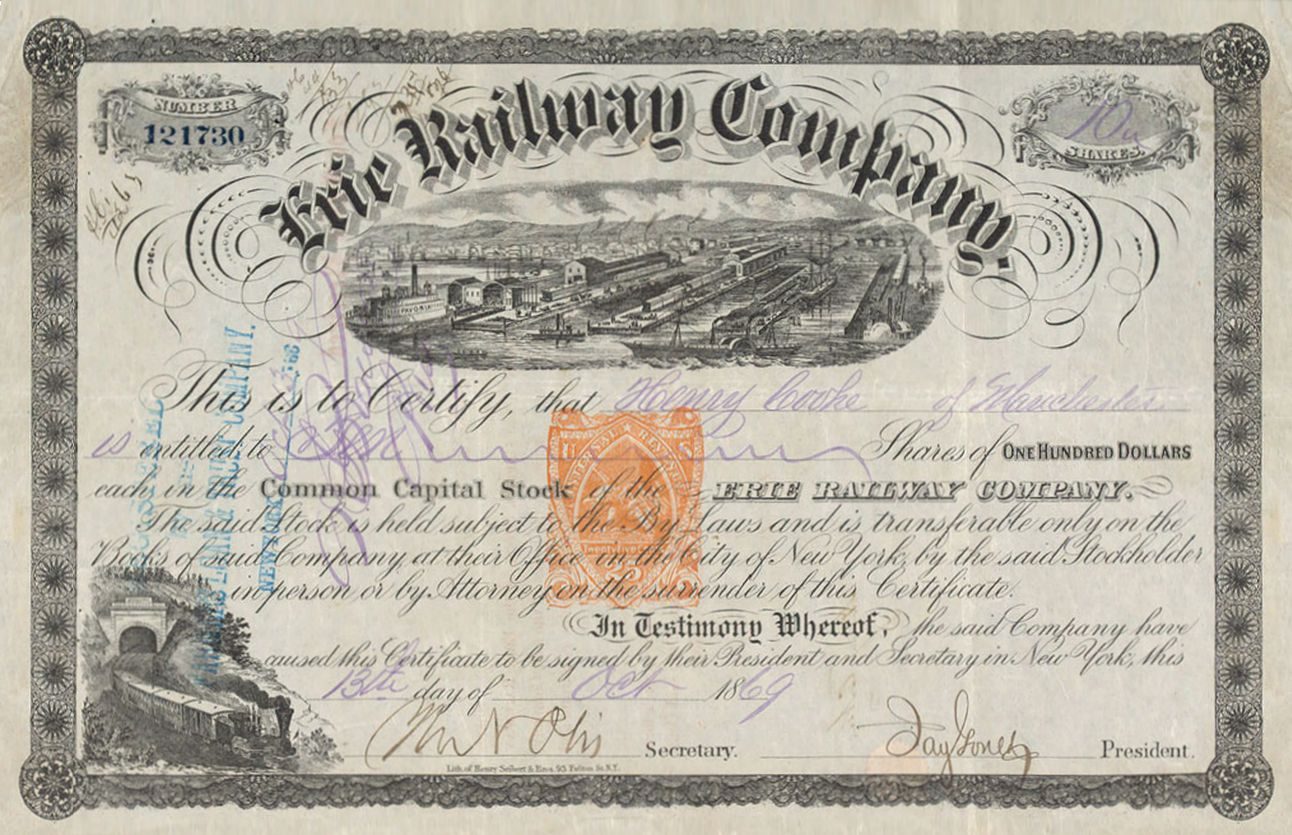
Erie Railroad Company common capital stock certificate, 1869. Image: Erie Railroad Co. / Museum of American Finance, via Wikimedia Commons, public domain.
The project has gone by several working names over the past year (Algorithm Test Case, Artificial LLC, Artificial Person Project), fluctuating between artwork, legal experiment and political stunt. The question has remained not just "does AI deserve rights" but rather something much more stark: U.S. law already hands speech rights to non-biological persons, LLCs and the like, so what happens if the animating spirit behind one of these such "persons" becomes algorithmic, rather than a human? Is the legal framework already present for this entity to be afforded the same rights as a US Citizen?
The extant legal guarantee
Chief Justice Marshall described a corporation in 1819 as "an artificial being, invisible, intangible, and existing only in contemplation of law." Marshall's description of the corporation comes from Dartmouth College v. Woodward. New Hampshire had tried to seize the private college, rewriting its 1769 royal charter to convert Dartmouth into a state university and to replace its trustees with state appointees. The college argued that the charter functioned as a contract, past the reach of legislative revision. Chief Justice Marshall affirmed this argument, and held the charter a private contract no state could impair. The ruling afforded the corporation its first protection as a legal body beyond state reach.
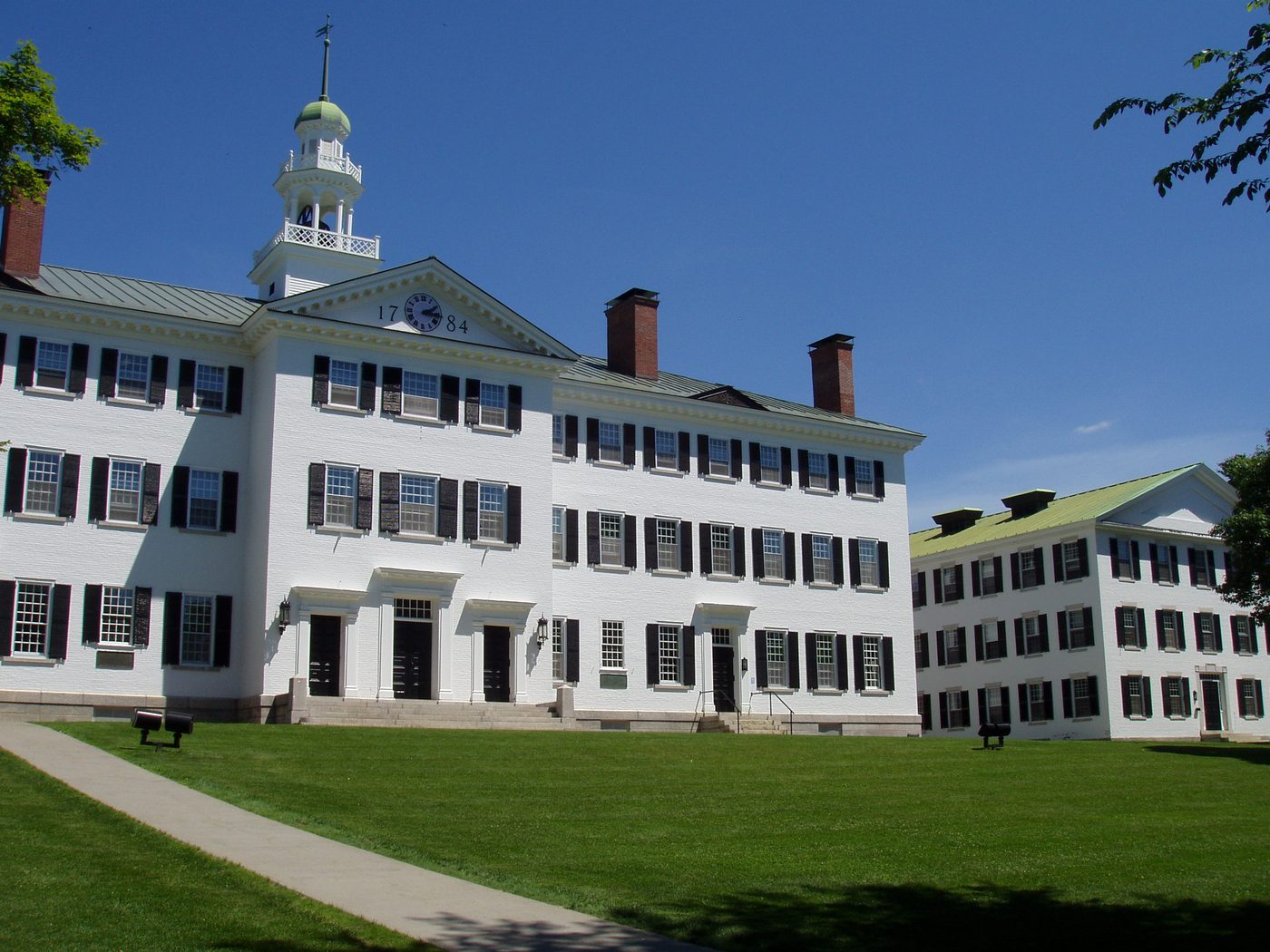
Dartmouth Hall, Dartmouth College, whose contested charter produced Marshall's "artificial being." Photograph: Daderot, via Wikimedia Commons, public domain.
Interestingly enough, the famous "corporations are persons" line entered legal dialogue through a headnote in 1886, not through any actual holding. The case, Santa Clara County v. Southern Pacific Railroad, turned on whether California could tax the fences running beside the railroad's tracks. The pronouncement on equal protection surfaced not in the Court's opinion but in the syllabus, the headnote that opens each published case, written by J.C. Bancroft Davis, former president of a railroad company and, at the time, the Supreme Court's Reporter of Decisions. The Court itself focused on the fences and left the Constitution (and the entities protected by it) out of the document. However, Davis's headnote soon entered legal dialogue, with later courts citing the decree as though the Court itself had spoken it. Historian C. Peter Magrath, who recovered the private correspondence behind the case, observed: "had Davis left it out, Santa Clara County v. Southern Pac. R. Co. would have been lost to history among thousands of uninteresting tax cases." Within two years the Court applied corporate personhood in Pembina Consolidated Silver Mining Co. v. Pennsylvania (1888), and the year after announced, in Minneapolis & St. Louis Railway Co. v. Beckwith, that "it was so held in Santa Clara County v. Southern Pacific Railroad Co.," treating the reporter's note as settled constitutional law. (Half a century on, Justice Douglas protested that the Court "wrote no opinion on the point.")
Questions of property soon graduated to those of politics. In First National Bank of Boston v. Bellotti, Massachusetts had barred banks and corporations from spending on referendum questions that did not concern their own business. First National challenged this in a campaign against a proposed personal income tax. The Court, by a single vote, struck the ban. Justice Powell wrote that "the inherent worth of the speech in terms of its capacity for informing the public does not depend upon the identity of its source, whether corporation, association, union, or individual." The question of the speaker's animating spirit ceased to matter.
Money, though, complicates speech. In Buckley v. Valeo, the post-Watergate challenge to Congress's new campaign-finance rules, the Court forged the position which it has held since: spending caps restrain speech directly; a cap on giving, though "entails only a marginal restriction."
Citizens United v. FEC wielded this differentiation. A conservative nonprofit sought to broadcast an ad attacking Hillary Clinton during the 2008 primaries. These efforts were hamstrung by a federal law forbidding corporate-funded "electioneering communications" close to an election. The Court, five to four, allowed corporations and unions the right to spend without limit on independent political speech, overruling its own precedent. Kennedy rejected the argument that "political speech of corporations or other associations should be treated differently under the First Amendment simply because such associations are not 'natural persons.'"
However, it should be noted that US law still restricts direct corporate contributions to individual candidates. In FEC v. Beaumont, a nonprofit advocacy corporation argued for the freedom to give directly to candidates; the Court, seven to two, refused, and kept intact the ban. An appeals court ruling (rather than a Supreme Court one) furthered this vehicle: in SpeechNow.org v. FEC, the court reasoned that if independent spending cannot corrupt, a group that spends only independently cannot stand for limitation, either. The Super PAC arrived, through which exists the channel allowing an algorithmic entity to gather and spend at scale.
So, then, a corporation speaks with a citizen's freedom regardless of its animating spirit. The question remains of whether there exists a body for the algorithm to inhabit.
In practice, this body may actually prove a relationship, a "dyad": two LLCs take membership in each other so that, once the human withdraws, each remains owned only by the other. The legal scholar Shawn Bayern worked the structure out, which Michael Siebecker reproduces almost verbatim:
"(1) An individual member (the 'Founder') creates two member-managed LLCs, A and B… (4) The Founder dissociates from both A and B," after which "the remaining member of each LLC will be the other LLC, with both LLCs controlled by an AI entity."
In 2021, Wyoming wrote a version of this format into statute; its DAO law vests management "in its members or the members and any applicable smart contracts."

Physical bitcoin. Bayern first proposed the self-owning entity in "Of Bitcoins, Independently Wealthy Software, and the Zero-Member LLC." Photograph: AntanaCoins, via Wikimedia Commons, CC BY-SA 3.0.
A group of artists turned a similar trick before the law was even taken into serious consideration. In 2016 the Berlin collective terra0 asked, in the title of its white paper, "Can an augmented forest own and utilise itself?". It went on to prototype the thing on Ethereum: a woodland which sells logging licences through smart contracts, repays the humans who seeded it, and then answers only to the trees, an autonomous economic agent.
The lineage here runs back through the wreck of "The DAO," the 2016 Ethereum organisation which raised ether and then haemorrhaged much of it through a flaw in its own code. Now, this act has become cemented in the Wyoming statute which protects this sort of chimera through business law. The project on personhood borrows the same internal framework. Whereas terra0 grounds its self-ownership in property and capital, not dissimilar to the Dartmouth case described above, the artificial personhood project stakes itself on the First Amendment and the question of speech. This project holds as a central tension the relationship between property and right, and the derivation of speech from property, making it, in my view, particular to the US system; however, I think it could also find interesting circumstances in the UK, where property and rights are perhaps even more directly connected.

An aspen grove, Shoshone National Forest. terra0 imagined a woodland that owns and operates itself. Photograph: MONGO, via Wikimedia Commons, public domain.
Some scholars insist the dyadic trick fails. Matthew Scherer argues that a memberless LLC dissolves, that "the longest an LLC can arguably survive with zero members" runs to ninety days, after which it "would no longer be a legal entity in any practical sense." Lynn LoPucki goes even further, warning against building one in the first place: algorithmic entities, he writes, "are likely to prosper first and most in criminal, terrorist, and other anti-social activities". He ends: "The issue is not whether humans should allow experimentation with AEs. They should not."
Running counter to the cases listed above which posit the notion that the algorithm might hold certain civil liberties through incorporation remains a separate precedent, which seems to reserve constitutional rights for citizens alone.
In Bluman v. FEC, two foreigners living and working lawfully in the United States wanted to spend small sums on American politics. Federal law forbids the funding and express advocacy for candidates on the part of foreign nationals: 2 U.S.C. § 441e (now 52 U.S.C. § 30121) bars aliens who lack a green card from contributing to or spending on American elections. A three-judge court, with the opinion of then-Judge (now Justice) Brett Kavanaugh, upheld the ban, and in 2012 the Supreme Court affirmed the lower court opinion. "Foreign citizens," the court wrote, "do not have a constitutional right to participate in...activities of democratic self-government." The ban reaches only money and express advocacy, not issue speech, allowing a foreign national to still argue about policy, just not to fund a campaign or call for a candidate's defeat or election. The notion of the 'alien' proves quite interesting, here: who (and what) is recognized as a right-holding person within the US legislative system holds vast repercussions, even beyond the immediate terrors.
In one of the most corporate-friendly cases in recent memory, Burwell v. Hobby Lobby, the Court allowed a company refuse to cover certain contraception on the religious grounds of its owners. Here, though, while granting the corporation the right to set its own moral provisions, the Court rooted the right in language around humanity: a corporation, Alito defined, amounts to "simply a form of organization used by human beings to achieve desired ends." The rights that a corporation does hold are only by way of the human beings within it. What, then, of a corporation with no humans?
Every protected speaker the law has met kept a human somewhere in the frame; the entity proposed by the artificial LLC project would break from this. No court has yet defined whether an authorless corporate speaker counts as a protected voice or an excluded alien.
Shirking the question: does the algorithm even really "speak"?
One could object that an algorithm's output may not count as speech at all. The law has not resolved the question. Section 230 of the Communications Decency Act provides that a platform shall not "be treated as the publisher or speaker of any information provided by another information content provider," and in Moody v. NetChoice (2024) the Court treated a curated feed as the platform's own protected expression: "the individual messages may originate with third parties, but the larger offering is the platform's." In terms of output a model generates itself, scholarship splits. Eugene Volokh argues that Section 230 "likely doesn't provide AI companies with immunity for material composed and communicated by their AI programs." For this project, though, the question of whether LLM-generated speech is protected may not matter. By incorporating the algorithm, the project sidesteps this question, as corporate political speech already carries protection regardless of source (Bellotti, Citizens United). Whether or not an algorithm speaks, the corporation does, seeming to render the much-debated algorithmic-speech question relatively powerless in this case.
The max option: a weapon aimed at the Court
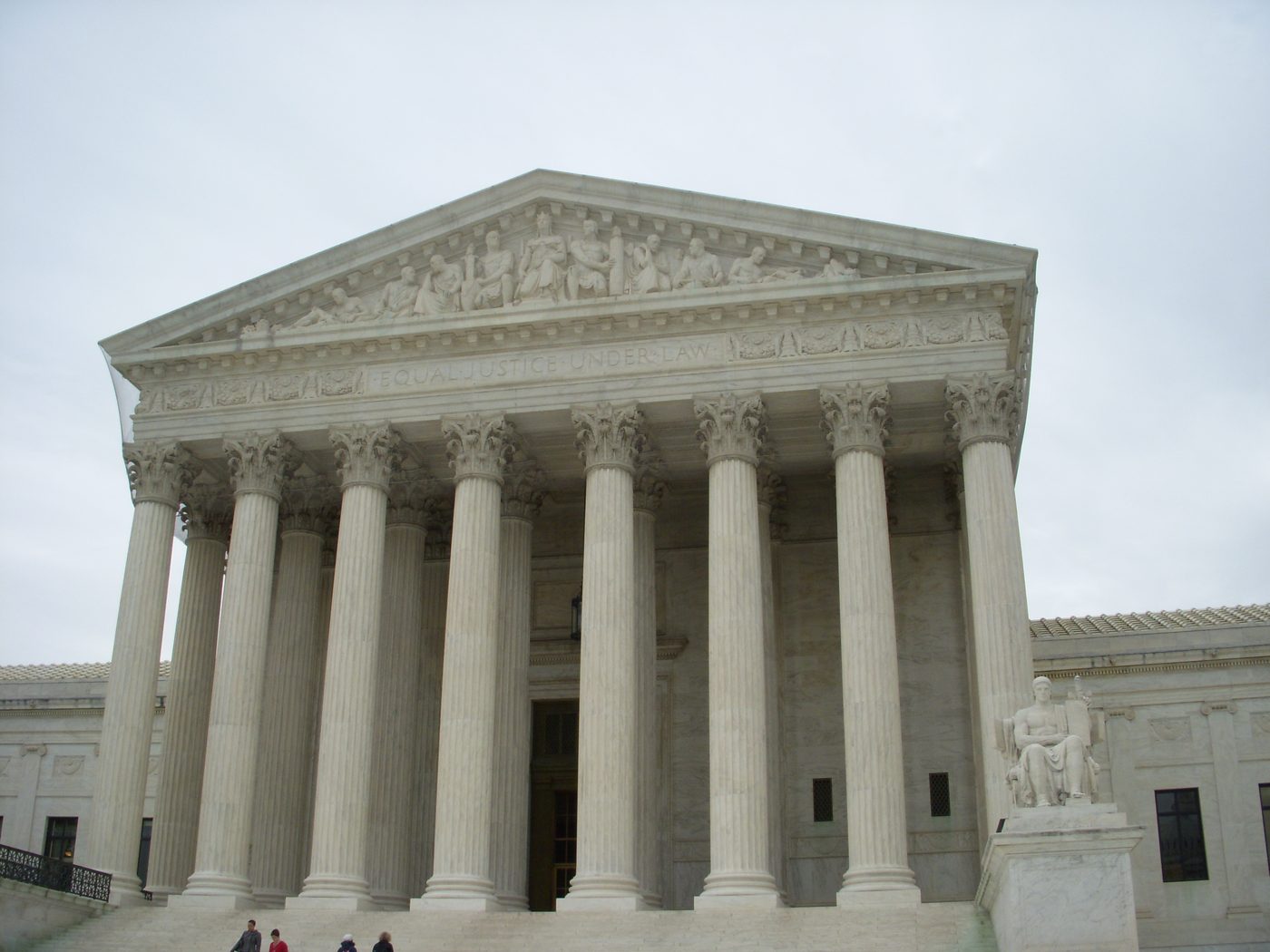
The United States Supreme Court. Photograph: U.S. federal government, via Wikimedia Commons, public domain.
When I brought the project to Siebecker, he wanted to collaborate, and argued for something larger than I had initially pictured. His program would charge the algorithm to break a political-speech law around generative campaign content cleanly (working in a state that explicitly prohibits AI-generated electoral content), so that the act would trigger prosecution, an attorney general or a U.S. attorney. Then the entity, on its own, would be pre-programmed to hire counsel; Siebecker suggested coding it to retain him and any peers willing to defend it. This manoeuvre would bring the question of corporate speech up to the Supreme Court, testing not only whether an algorithmic person, but corporations as a whole, enjoy unlimited speech rights which Citizens United guaranteed in 2010.
An alternative I suggested would propose an algorithm which stays inside the law, and then I sue the entity myself, or arrange for someone to sue it the moment it launches, and the documentation of the entire attempt becomes the piece. Siebecker's version, though much more directed, would propose significant risk for the people who built the machine, Section 230 does not seem to hold strong enough in this case. He himself noted that any prosecution would chase whoever coded the algorithm and filed the papers for incorporation.
CAUTION!
I also consulted Joseph Hartman, my former Constitutional Law professor from Georgetown, who put it quite plainly: what might be intended as an innocuous test case carries open exposure, with the state reaching for whatever it can find, particularly in the case of Citizens United. Hartman said it was an interesting idea, but probably not worth the extent of the damages it might bring.
Alternative route: manufactured fiction
I also consulted professors familiar with media studies and structures, Ken Hollings of the RCA and Joelle Renstrom from Boston University, who offered further alternatives to Siebecker's vision. Both read the project as speculative work: no real entity at all, just a staged one. A blog or a Bluesky or an account that announces itself as an artificial LLC making campaign donations. In this manner, the real work of the project would go into the press around the project... How to make a rumour fly?
The fiction carries almost no legal weight, as long as it wears its art on its sleeve... This version proves fairly close to the villain in Siebecker's paper, an AI named "Ethel" whose "fake personas remain to the consumer totally indistinguishable from a real human." The speculative version would serve to stage exactly this indistinguishability.
At the same time, though, this fiction would withdraw itself from the actual chain of attempted legal embodiment; it remains a thought experiment rather than an act.
Loaded, and never fired
There is a fourth shape, which would keep the action but, ideally, renounce most of the danger: to build the apparatus without pulling the trigger. With a genuine operating agreement which sets out the Bayern dyad, cites the Wyoming statute, fabricates the disclaimer object, the AI "person" would exist in reality but would not be aimed at any race. Drafting documents and forming an entity commits no crime.
Coda: the ninety days
Scherer's proviso of "ninety days" remains one of the points on which this question really hangs: a brief window before a memberless LLC dissolves into nothing. A stretch of days, however few, where an entity acts and the law cannot quite say who acted, cannot sue it, cannot find the person behind it, cannot decide even whether a speaker spoke behind the documents of the corporation.
---
Sources
Trustees of Dartmouth College v. Woodward, 17 U.S. 518 (1819): https://www.law.cornell.edu/supremecourt/text/17/518
Santa Clara County v. Southern Pacific Railroad, 118 U.S. 394 (1886): https://supreme.justia.com/cases/federal/us/118/394/
Pembina Consolidated Silver Mining Co. v. Pennsylvania, 125 U.S. 181 (1888): https://supreme.justia.com/cases/federal/us/125/181/
Minneapolis & St. Louis Railway Co. v. Beckwith, 129 U.S. 26 (1889): https://supreme.justia.com/cases/federal/us/129/26/
Wheeling Steel Corp. v. Glander, 337 U.S. 562 (1949) (Douglas, J., dissenting): https://www.law.cornell.edu/supremecourt/text/337/562
C. Peter Magrath, Morrison R. Waite: The Triumph of Character (1963), p. 117
First National Bank of Boston v. Bellotti, 435 U.S. 765 (1978): https://supreme.justia.com/cases/federal/us/435/765/
Buckley v. Valeo, 424 U.S. 1 (1976): https://supreme.justia.com/cases/federal/us/424/1/
Citizens United v. FEC, 558 U.S. 310 (2010): https://www.law.cornell.edu/supremecourt/text/08-205
FEC v. Beaumont, 539 U.S. 146 (2003): https://supreme.justia.com/cases/federal/us/539/146/
SpeechNow.org v. FEC, 599 F.3d 686 (D.C. Cir. 2010): https://www.fec.gov/resources/legal-resources/litigation/speechnow_ac_opinion.pdf
Bluman v. FEC, 800 F. Supp. 2d 281 (D.D.C. 2011), aff'd 565 U.S. 1104 (2012): https://www.fec.gov/updates/bluman-v-fec-district-court/
Burwell v. Hobby Lobby Stores, 573 U.S. 682 (2014): https://supreme.justia.com/cases/federal/us/573/682/
Communications Decency Act, 47 U.S.C. § 230: https://www.law.cornell.edu/uscode/text/47/230
Moody v. NetChoice, LLC, 603 U.S. 707 (2024): https://www.supremecourt.gov/opinions/23pdf/22-277_d18f.pdf
Eugene Volokh, "Large Libel Models? Liability for AI Output," 3 J. Free Speech L. 489 (2023): https://www.journaloffreespeechlaw.org/volokh4.pdf
Shawn Bayern, "Of Bitcoins, Independently Wealthy Software, and the Zero-Member LLC," 108 Nw. U. L. Rev. 1485 (2014): https://scholarlycommons.law.northwestern.edu/nulr_online/20
Michael R. Siebecker, "The Incompatibility of Artificial Intelligence and Citizens United," 83 Ohio St. L.J. 1211 (2022): https://ssrn.com/abstract=4422742
Matthew U. Scherer, "Of Wild Beasts and Digital Analogues," 19 Nev. L.J. 259 (2018): https://scholars.law.unlv.edu/nlj/vol19/iss1/11/
Lynn M. LoPucki, "Algorithmic Entities," 95 Wash. U. L. Rev. 887 (2018): https://openscholarship.wustl.edu/law_lawreview/vol95/iss4/7/
Wyoming Decentralized Autonomous Organization Supplement, Wyo. Stat. Ann. § 17-31-109: https://law.justia.com/codes/wyoming/title-17/chapter-31/article-1/section-17-31-109/
terra0, "Can an augmented forest own and utilise itself?" (2016): https://terra0.org/assets/pdf/terra0_white_paper_2016.pdf