
How to Disappear Completely @ Safehouse 1, Peckham
- Julianna Hellerman
- Feb 8
- 3 min read

Jetlag Projects creates a site-responsive dialogue featuring Massimo Bartolini, Emanuel de Carvalho, Ge Hui, Lisa Chang Lee, Hamish Pearch, Mohammed Sami, Andra Ursuta, Justin de Verteuil and Jaime Welsh.

It is impossible not to feel a bit superstitious when stepping into Maverick Studios' Safehouse properties; there is something irresistibly haunted about the space. It must be my favourite space in London: I've visited a number of shows here, and even curated my own last March. Jetlag projects did a fantastic job of working with the existing features of the property, which the site makes it impossible not to do.
Maybe that's where the hauntedness of Safehouse becomes clear. The site demands a level of respect for its history, scars, ghosts. Nails and screws in the wall, left over from previous shows, act almost as offerings at the altar of the venue.


What is it that is so attractive about a space like Safehouse to people in and around the art community? When I tell people from outside about the experience of curating my own show there and show them pictures of the venue, I'm almost universally met with raised eyebrows. But within the self-organising London community, artists are so commonly drawn to deconsecrated churches, old cinemas, run down properties with an undeniable surface history like this one.
Maybe this artistic interest stems from an excitement the demand of material realities, the experience of art or creation being confined by architecture or holes in walls. Artists are naturally drawn to materials and materiality and materialism.

Jamie Welsh hints at this experience of confinement. The glossiness of his large photograph on the first floor immediately contrasts greatly with the dilapidated surroundings of the space, but at the same time the work seems almost to extend it. Welsh's work introduces a dialogue with structural restrictions alongside the experience of material confinement.

Emanuel de Carvalho likewise creates a harsh break from the natural space, and does so in a way that is quite harsh. Like Welsh, this intervention serves to shift the experience of not just the emotional and aesthetic layers of the site, but also the natural response to its architecture. There is something about seeing such an immediate and sharp work within this site that is just so exciting, maybe sexy is the word I'm looking for?
Lisa Chang Lee explores this dialogue between sharpness and space, seeming to announce the discourse itself through her work, in which she juxtaposes standards of measurement against things that could not possibly be measured. Lisa's inclusion of a small watch face having been taken from its original housing, and thereby stripped of any purpose or capacity for measurement, serves as a subtle metaphor for the juxtaposition of abstract material and structural confinement and an almost impossible vastness which must be, somehow, understood within those confines.


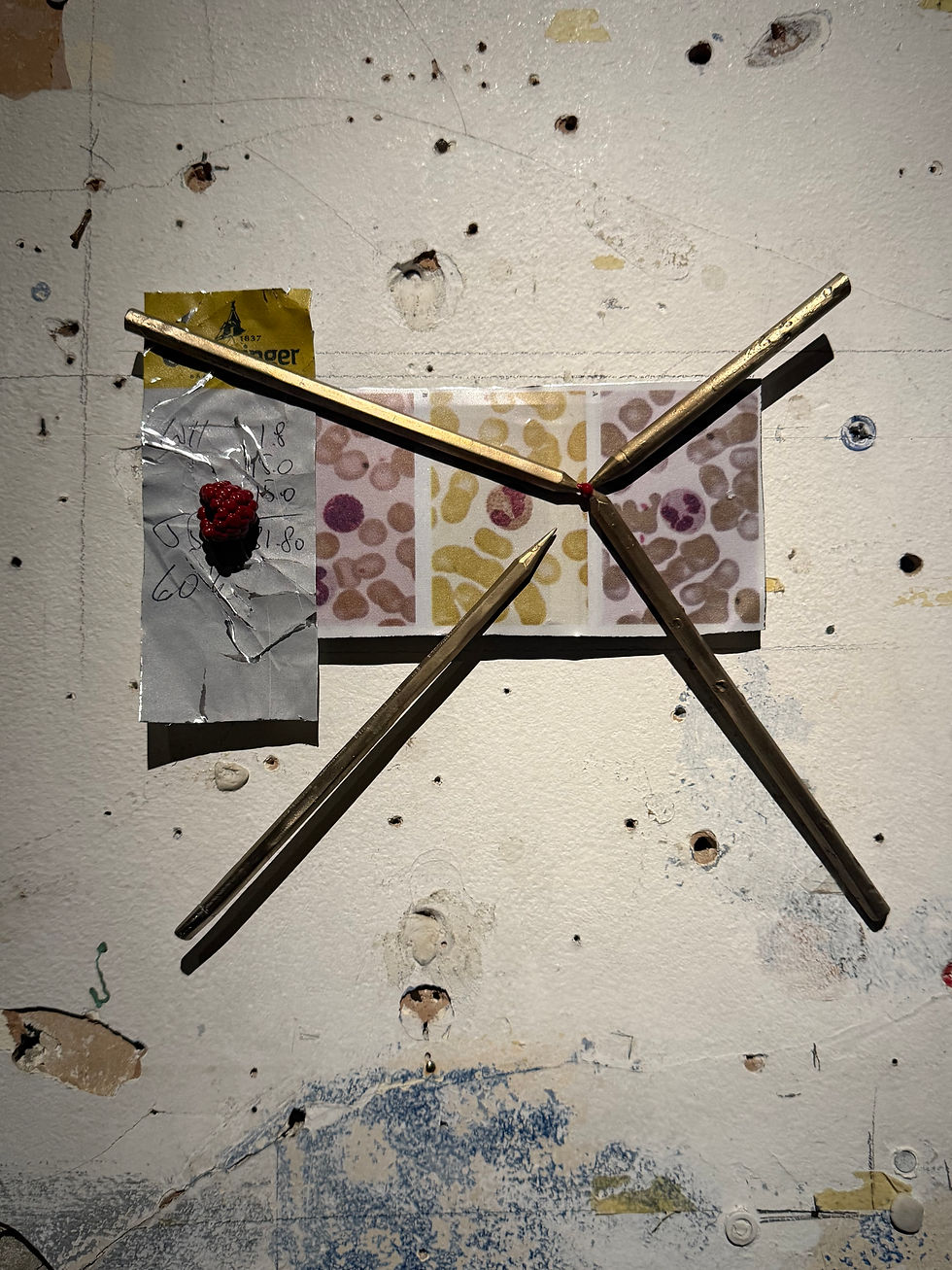
Hamish Pearch's Raspberry Bang indicates a similar position, or contrast at least, but with a microscopic focus in both capture and content. There is something undeniably funny about this approach, which makes the idea of capturing such an expansive field seem relatively silly. I can appreciate this.
The finishing of the frame around Andra Ursuta's cast struck me immediately, and again indicates this aesthetic theme of sleek confinement being positioned against something which is threatening to burst out or fall apart. There is almost a sense of wrangling something, here and in the show as a whole, but the apparatus used for the wrangling seems so beautiful and so chillingly refined.
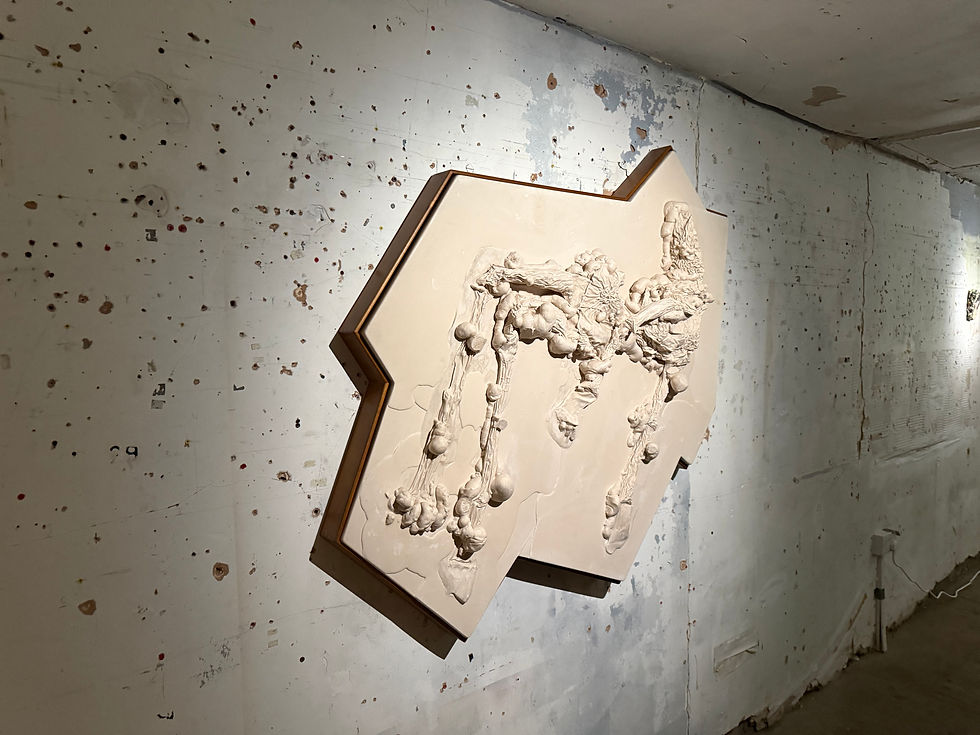
Maybe that's the thing that attracts me so much to the show, as to Safehouse in general: the intrigue of controlling and manipulating something so unwieldy in such a measured and compact way. I won't begin to universalise this excitement, but I wonder if other artists have it too.


Comments